The last client leaves, the music goes off, and there’s still hair to sweep, tools to put away, and tomorrow’s appointments to review. But the day’s conversations are finished.
It may have been a great day. Clients left happy. We laughed. I finally ate lunch, even if it was at four in the afternoon. Yet by the time I get home, change into comfortable clothes, and sit down, another conversation can feel almost impossible.
An hour earlier, I could discuss someone’s vacation while mixing color and trying to remember precisely how I cut their hair last time. From my couch, responding to a text feels considerably more ambitious.
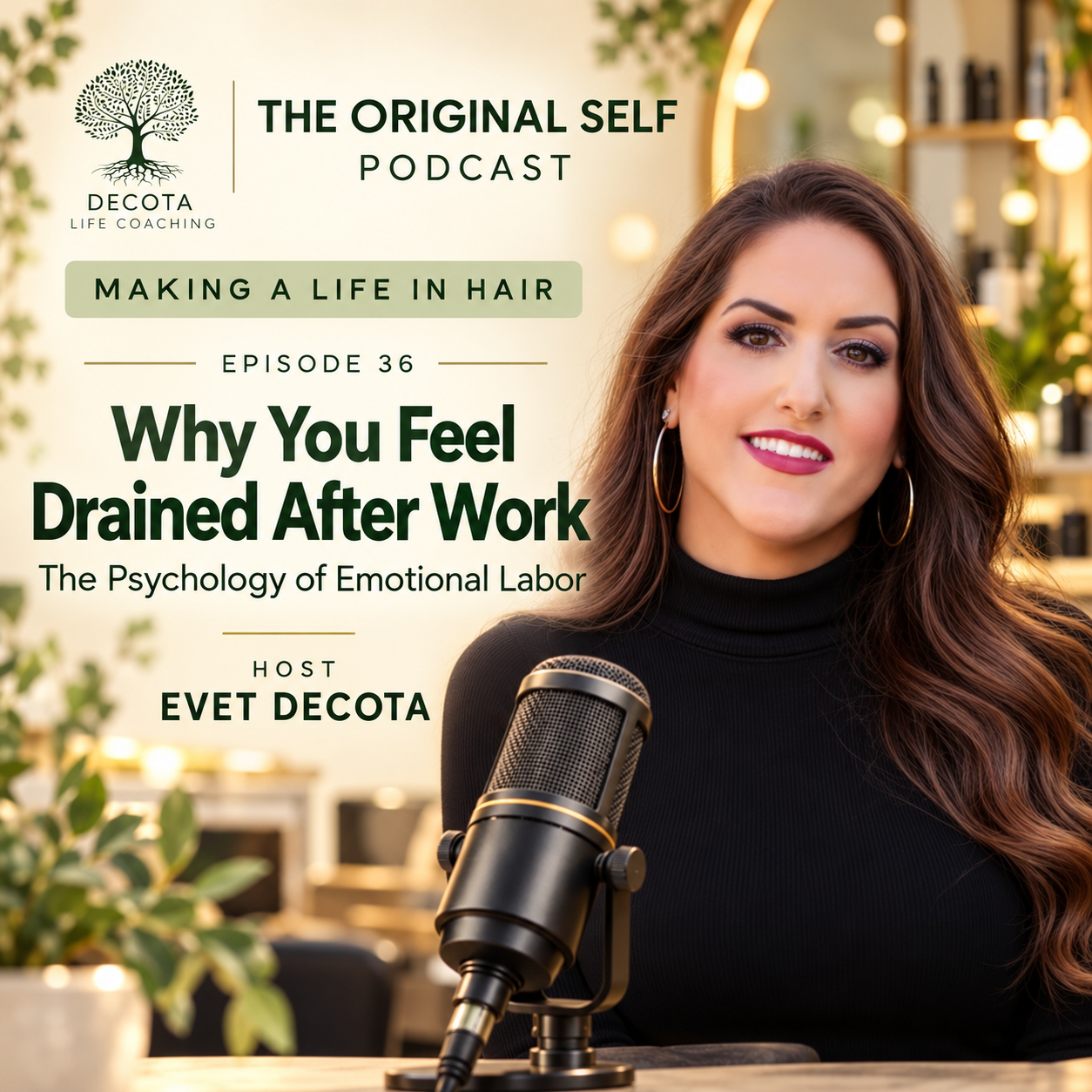
That experience is where I’m beginning Making a Life in Hair, a monthly series within The Original Self Podcast. After four decades as a stylist, salon owner, and instructor, I want to explore what we give to this work, what we need ourselves, and the honest conversations that help us continue enjoying our careers.
The salon provides my stories, but these questions reach anyone who spends the day helping people, managing expectations, and staying composed.
The work behind the appointment
An appointment book might say “color and haircut.” It doesn’t tell you that the person arriving is nervous because a previous stylist damaged their hair. Or that they want a major change but need you to promise they’ll love it.
Before picking up a brush, you’re figuring out what they mean, what’s possible, and how to explain the difference clearly. Meanwhile, you may be running behind, your knees hurt, and you’ve needed the bathroom for two hours.
You could at least address that last problem. You’re already behind; what’s one more minute?
When you return, though, you still need to respond thoughtfully to the person in your chair.
There’s a name for managing your feelings and emotional expressions to meet the expectations of your job: emotional labor. It is one part of what work can require, alongside physical effort and concentration.
Sometimes you manage what you show while your feelings remain unchanged. You’re frustrated, but your voice stays steady. Other times, understanding changes your response. You recognize that a client’s repeated questions come from anxiety, and patience becomes easier.
This doesn’t mean every pleasant interaction is an act. I genuinely enjoy my clients, and many conversations make my day. But warmth sometimes requires a deliberate adjustment.
Where does that happen for you? What do you do with your first reaction before responding?
You may be so practiced that you barely notice. You know how to soften an explanation, recover from an awkward comment, or keep an appointment comfortable while having a difficult day yourself. Just because you make it look effortless doesn’t mean it is.
Then there are the expectations we add ourselves.
A client may be perfectly content to sit quietly while I work. But if I start wondering whether they’re bored or whether I should ask more questions, I can turn their silence into another responsibility.
Nobody was complaining, but I just gave myself another job.
What do we assume people expect from us? Have they asked for more, or have we decided it’s necessary?
Understanding why we feel drained begins with noticing where our effort goes, including effort we’ve become so accustomed to making that we no longer count it.
What follows you home
Some days, you leave the salon feeling better than when you arrived. A client loved the change she’d been nervous about. Someone made you laugh so hard you had to stop cutting for a minute, probably for the best. You get home wanting to tell someone about it.
Other days, you’re replaying an appointment while making dinner. Did you understand what she wanted? Could you have handled the conversation differently? You notice you’re still tense, even though the appointment ended hours ago.
When feelings from one part of life carry into another, psychologists call it emotional spillover. Satisfaction can follow us home, and so can frustration.
Think about a recent day when you left work feeling good. What made the difference? The work itself? A conversation? Having enough time between appointments?
We can become very aware of what wears us out while paying less attention to what helps us enjoy the day.
Sometimes both happen. You feel proud of your work and physically tired. You’ve enjoyed your clients and had enough conversation. A good day can still ask a lot of you.
“I’m drained” describes a feeling, but it doesn’t tell you much about what would help. What are you carrying home: something you want to share, something you need to think through, or something you’re ready to put down?
You don’t have to figure out exactly why you feel this way. Recognizing that you need quiet may be enough to say, “I’d love to catch up. Let me have a little time to settle in first.”
You’re helping someone understand what you need without asking them to guess.
When does your workday end
You’re home, checking tomorrow’s appointments. A client messages about her color, so you pull up her formula. Then you remember you need to order supplies.
Each task takes a few minutes. Together, they can keep you working for much of the evening.
Psychological detachment means mentally stepping away from work during time off. You get a break from doing the job and thinking about it.
I admit I don’t have much detachment from my business. At my age, if I don’t schedule the appointment, order the product, or return the text when I think of it, I’ll probably forget later. So I do it immediately.
I could use the reminders app. Doing the task just seems faster. Somewhere along the way, I’ve decided that owning a successful business means I’m open twenty-four hours a day for whatever comes up.
What tells you that you’re finished? Is there a stopping point, or do you keep going until you’re too tired?
Sometimes the task is practical. Other times, you want something settled. A client asks to reschedule, you send available times, and now you’re waiting for her answer. Another look at the phone might resolve it. It might also leave you checking for another hour.
My approach has occasionally been to send a few question marks. Apparently, I believe punctuation should create a sense of urgency.
It helps to notice whether you’re choosing to handle a task, reacting to the discomfort of leaving it unfinished, or checking out of habit.
You could experiment with a stopping point: finish notes before leaving, put tomorrow’s tasks in one place, or establish hours for routine messages.
You can also consider what your booking platform can handle. Online scheduling, automated reminders, or an AI assistant that handles appointment requests could reduce the exchanges you manage after work. Which tasks need your judgment, and which could happen without you? Weigh any service costs against the time and attention you currently spend.
Then consider what you want your evening to contain. If it usually involves hair reels with a television show in the background, would cooking, walking, gardening, or seeing a friend feel more satisfying?
What do you enjoy that has nothing to do with being useful, productive, or available? When did you last make room for it?
I personally need to listen to my own podcast a few times.
The conversation you’ve avoided
Sometimes we agree to something, then resent doing it. We squeeze in an appointment, skip a break, or stay late because saying yes feels easier than explaining what we can offer.
There are real pressures: earning a living, retaining clients, and running a business while standing behind the chair all day. Still, it’s worth noticing when we treat a request as an obligation.
Think about something you agreed to and regretted. What made it hard to say no?
Your explanation doesn’t need a long defense. “I can’t fit that service into Thursday, but I can give you the time it needs on Tuesday” tells the client what’s possible.
With a coworker, it might be, “I can help today, but I can’t keep staying late. We need another arrangement.”
If you’re the owner, have you explained who handles a task and when it’s due? Or have you kept doing it yourself while becoming increasingly annoyed that nobody notices?
Experience doesn’t make us immune to avoiding uncomfortable exchanges. Sometimes it gives us more practice working around them.
You may need to revise an arrangement you helped establish: “I know I’ve often made this work in the past. I need to change how I schedule now.”
Then follow through. If you keep offering your day off after explaining that it’s unavailable, the old arrangement continues.
What expectation do you need to clarify before agreeing to something else?
Making room for your life
I’m still learning what helps me enjoy this career and questioning habits I once thought were simply part of the job.
You can make adjustments, too. Loving your work doesn’t mean doing it the same way forever.
What’s one change you could make this week to create more room for life outside work? Start small enough to find out whether it helps. You don’t have to wait until retirement to change how you work.
If you’d like support figuring out what that could look like, book a free discovery call with DeCota Life Coaching. It’s a simple conversation with no pressure or commitment.
Research behind this essay
Emotional Labor: Regulating Emotions for a Wage, Alicia A. Grandey and Gordon M. Sayre.
Daily affect spillover from work to home: Detachment from work and sleep as moderators.
The Recovery Experience Questionnaire, Sabine Sonnentag and Charlotte Fritz.