Does Your Former Self Have to Die For Growth
A conversation with Joseph Okoroji, author of A Mark in the Sand
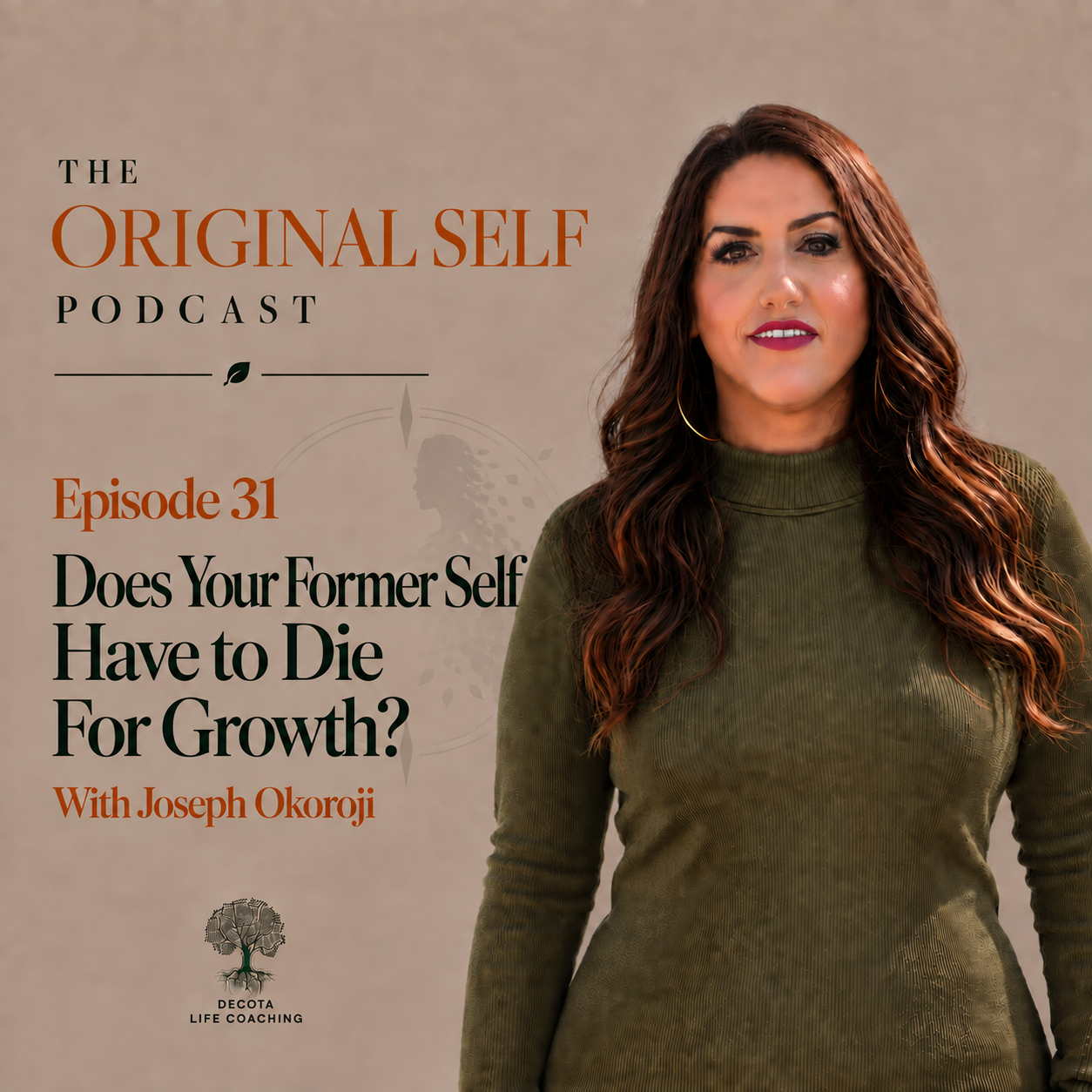
Episode 31 cover for The Original Self Podcast, Does Your Former Self Have to Die For Growth, featuring host Evet DeCota and guest Joseph Okoroji.
What if people do not recognize the new you because the person they knew no longer exists in the same form? That question brought author Joseph Okoroji to The Original Self Podcast after he heard Episode 29 on labeling theory and the way people respond when we change.
In this long-form conversation, Evet and Joseph explore the darker and more complicated side of transformation. The agreeable version of us may stop agreeing. The people-pleaser may begin setting limits. The identity built around anger, insecurity, overpreparation, or self-protection may no longer be in charge. Those changes can feel liberating, but they can also create grief for the people around us and for the parts of ourselves that once relied on those identities to survive.
Joseph explains why he uses the language of death, including his memorable metaphor about evolution and giraffes with short necks. Evet challenges the finality of that framing. What if growth is not the destruction of the former self but an integration of what it taught us? What if the goal is not to erase who we were, but to decide which part of us gets to lead now?
Drawing on Joseph's book A Mark in the Sand, the conversation moves through a lost cruise-ship opportunity, shame, the fear of hope, the difference between blame and ownership, permission-seeking disguised as advice, the power and danger of momentum, the cost of sacrifice, and the importance of remaining teachable. This episode is for anyone who has changed and been told, 'You're not the person I used to know,' or who is trying to grow without turning against the person they once needed to be.
Listen to the full conversation, then ask yourself: What did my former identity once protect, and what does it no longer need to decide for me?